
Geological Survey of Victoria highlights importance of quarries
Recent work by the Geological Survey of Victoria (GSV) highlighted the important role Victorian quarries play in advancing peoples understanding of Victoria’s geology, including critical minerals.
As part of a major study published late last year, the GSV evaluated zirconium, niobium and rare earth elements in a suite of alkaline igneous rocks. These rock types are relatively uncommon in Victoria and had not previously been analysed using modern whole‑rock geochemistry and age‑dating techniques.
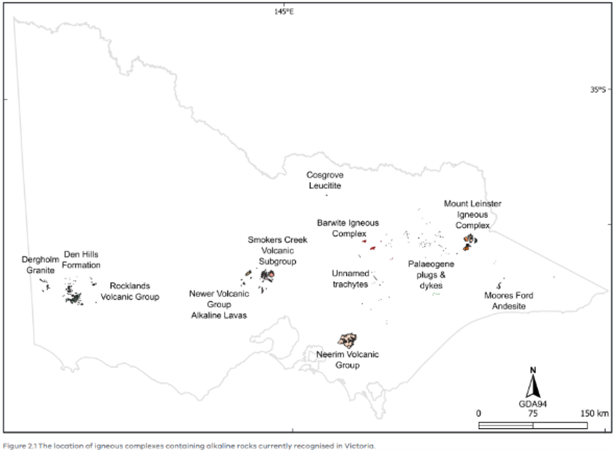
A key element of this work was the ability to access fresh, unweathered rock exposures in operating Victorian quarries. Quarry sites provided high‑quality samples that would be difficult or impossible to obtain elsewhere, saving significant time and reducing the need to disturb new ground.
The GSV acknowledges and thanks quarry operators for their assistance, noting that access to these fresh exposures greatly improves the quality of geochemical and geochronological (i.e. rock age) data and supports more efficient and accurate scientific work.
Analysis of samples collected from quarry exposures, including rocks from the Den Hills Formation near Coleraine, returned elevated concentrations of rare earth elements, niobium and zirconium.
While these values are not immediately economic, they are considered geochemically significant and confirm that these elements associated with alkaline rocks do exist in Victoria.
Importantly, age‑dating of some Victorian alkaline rocks showed they are the same age as the Toongi rare earth element deposit in central New South Wales, a new and noteworthy finding for the state.
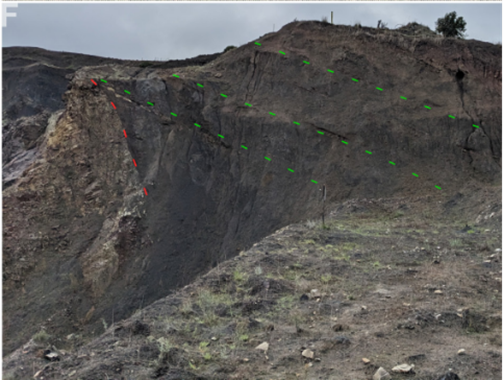
To better understand the nature of these findings, the GSV paired geochemical analysis undertaken at commercial laboratories with mineral identification conducted in collaboration with the CSIRO.
This mineralogical work helped determine how and where these elements are hosted within the rock, information that is critical for early‑stage decision‑making on the potential to extract rare earth elements if present.
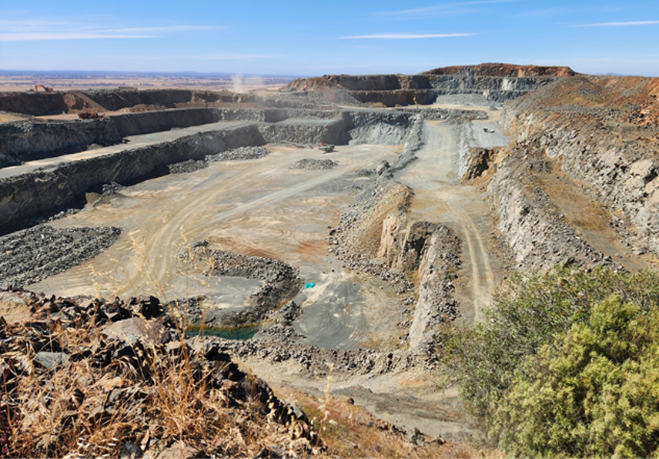
In addition to the alkaline rock study, GSV has continued broader quarry‑based sampling to build Victoria’s baseline geochemistry and rock age datasets, which have not been systematically updated for some years.
Recent work at sites such as the Lake Cooper quarry in north‑central Victoria have focused on both basalts and interflow sediments associated with ancient submarine volcanic activity more than 500 million years old.
These studies are contributing to a wider program aimed at better understanding gold–antimony systems in Victoria, including potential sources for these metals deep beneath our feet.
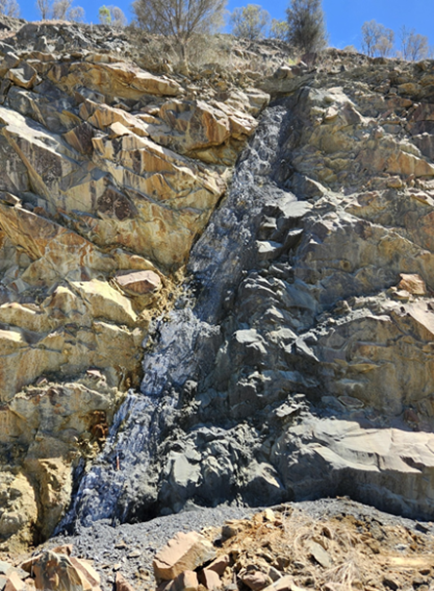
The GSV collaboration with quarry operators is central to helping advance Victoria’s geology. Quarry access enables safer, faster and more effective sampling, reducing unnecessary disturbance, and ensures that high‑quality scientific data can be generated for the benefit of industry, government, researchers and the broader community.
All project reports and conference presentations are publicly available through the Resources Victoria website, and the GSV welcomes ongoing engagement with industry on future sampling opportunities.
The report is available on the Geological Survey of Victoria website




You must be logged in to post a comment Login